Sep 30, 2012

1973 N.L. Champion Mets Pitcher: Buzz Capra (1971-1973)

Lee William Capra was born October 1, 1947 in Chicago, Illinois. The five foot eleven righty was selected by the New York Mets in the 27th round of the 1969 draft. He helped Illinois State University win the college championship that same year.

He became another highly touted pitching prospect for the early 1970’s Mets, having a great minor league career going 44 -18 with a 2.86 ERA overall. In 1971 after going 3-0 at AA Memphis, Capra was promoted to AAA Tidewater. There he went 13-3 second to Jim Bibby in victories while posting a .219 ERA. Capra earned a September call up & debuted at Shea Stadium on September 15, 1971.

He pitched four innings in relief of Jerry Koosman, in a 6-2 loss to the Chicago Cubs. On September 27th, in his third & final outing of the year; he was roughed up by the St. Louis Cardinals, allowing five earned runs in less than an inning pitched taking the loss.

In 1972 he was with the club out of Spring Training in April. He earned his first career victory on April 25th in San Diego while making in his first career start. He allowed just one run in six innings of work. In his next start he was roughed by the Dodgers in Los Angeles, as he allowed seven runs on nine hits, getting knocked out in the 4th inning.

On Saturday, May 13th he beat Juan Marichal & the San Francisco Giants at Shea Stadium. He drove in the only run of the game with a 2nd inning single. He tossed a three hit shutout, striking out seven Giant batters. He won his next start as well, tossing seven innings with three runs allowed in Philadelphia.

After that he struggled & found himself pitching out of the bull pen. He had control issues & got sent back down to AAA Tidewater in July. He finished the 1972 season 3-2 with a 4.50 ERA, striking out 45 batters while walking 27 in 56 innings pitched over 14 games.

In 1973 he started out going 4-5 at AAA Tidewater, when he got called up in June, to help out a struggling bullpen. The Mets relief ace; Tug McGraw was having troubles & the staff was struggling through injuries as well. On June 27th, Capra got his first save, coming against the Philadelphia Phillies after pitching four shutout innings. He struggled in his first two months back up, finding himself at 1-5 with two blown saves at the end of July.

Capra improved from there settling down to go 2-3 with three saves the rest of the year. On August 7th he pitched three innings of relief earning a win against the St. Louis Cardinals. On September 18th he earned a key save at Three Rivers Stadium in Pittsburgh, as the Mets scored five runs in the top of the 9th inning, which brought them within 2 1/2 games of the first place Pirates.


Overall in the 1973 Mets NL Championship season, Capra appeared in a total of 24 games, going 2-7 with four saves, 35 strikeouts & 28 walks in 42 innings pitched, while posting a 3.86 ERA.

Post Season: Although he did not pitch in any 1973 post season games, he did have a part in some of the theatrics. It came during Game #3 of the NLCS at Shea Stadium, during the famous Bud Harrelson / Pete Rose fight. After the Harrelson and Rose were broken up, the benches had cleared as well as the bullpens. Both teams just milled around the infield for a while, until Cincinnati Reds reliever Pedro Borbon landed a sucker punch to the right temple of Buzz Capra’s head. Next, he and backup catcher Duffy Dyer started pounding on Borbon, before being pulled out of the melee by Willie Mays.

After the dust settled and the teams were going back to their dugouts, Borbon was walking off the field & put a cap on his head. But to his surprise it was pointed out by another Reds player, that it wasn’t his Reds cap but Buzz Capra’s Mets cap. Borbon yanked the cap off his head and bit a chunk out of it, before throwing it to the ground. Capra eventually got his Mets cap back & claims to still have it to this day.

After the 1973 season the Mets sold Capra to the Atlanta Braves in what turned out to be a bad deal for New York. Capra had a fantastic 1974 season, leading the major leagues with a 2.28 ERA, going 16-8 (7th most wins in the NL) with five shutouts (Third in the NL) & 11 complete games (10th in the NL).

Capra struck out 137 batters, walking 84 in 217 innings & had the best hits per nine innings ratio in the league. He was named to the All Star team by his former Mets manager Yogi Berra, & came in the top ten voting for the Cy Young award. He also set an Atlanta Braves record for consecutive victories by winning nine straight games.

The following year in 1975, he only pitched in 12 games going 4-7 with a 4.25 ERA. He suffered a shoulder injury which ended up ruining the remainder of his career. In 1976 he missed almost the entire season, pitching in just five games (0-1). Capra attempted a comeback in 1977, going 6-12 pitching in 45 games with an ERA of 5.36. The shoulder injury forced him to retire at age 30 by 1978.

In a seven year career he was 31-37 with five saves, 362 strike outs & 258 walks in 544 innings pitched posting a 3.38 ERA in 142 appearances. At the plate he had a decent .135 batting average for a pitcher.


Retirement: After retiring as a player, Capra spent over twenty years as a professional pitching coach for the New York Mets, Atlanta Braves & Philadelphia Phillies organizations. He was the pitching coach for the A ball St. Lucie Mets in 2007.

He is also available year round for private and group pitching instruction at the Fox Valley Sports Academy in Elgin, Illinois. Buzz also frequently appears at Mets Fantasy camps.

What Mets Pitcher Was On the Losing End of the Jim Bunning's 1964 Fathers Day Pefect Game At Shea: Tacy Stallard (1963-1964)

Evan Tracy Stallard was born August 31, 1937 in Coeburn, Virginia. The tall right-hander signed with the Boston Red Sox in 1956, and pitched in the minor leagues for four years.

In 1959 he posted a 1.68 ERA with a 9-4 record, marking his best minor league season. In 1960 he pitched at A ball Allentown going 4-5, moving up to AAA Minneapolis where he was 7-11 as the Sox gave him a September call up. He made four brief appearances in 1960, getting out all 15 batters he faced, striking out six of them.

In 1961 he pitched in mostly relief earning two saves without getting credit for a win until August, when he was being used as a starter. He was pitching well against right handers but struggled against lefties. Stallard lost his next three games, before notching a win at Minnesota on September 3rd. He lost his last three decisions & on the last game of the season, became famous for giving up Roger Maris’ 61st HR.

From this event he received a lot of media attention, becoming an all time trivia answer. "I'm glad he did it off me. Otherwise, I would never have been thought of again. I've had a good time with it." Stallard said years later. In that game, the HR was the only run he allowed over seven innings, but Boston was unable to score any runs & lost 1-0.

On the season he went 2-7, with a 4.88 ERA and got sent back to the minors in 1962 for a tune up. That December he was traded to the New York Mets along with Pumpsie Green & Al Moran in exchange for Felix Mantilla.

With the Mets, Stallard debuted on April 10th 1963 at the Polo Grounds in relief of Al Jackson. The next day he allowed a walk off HR to the Braves Lee Maye for a loss in Milwaukee. He began as a reliever losing three games in April, but was put in the rotation by the beginning of June. He had a good start in that role, throwing two complete games, while earning victories in two of his first three starts. Both wins came against the Reds, the first at home & then a one run , nine inning performance in Cincinnati. In the month of June he was 3-2 with an ERA of 2.23, but then everything fell apart.

He went 3-12 the rest of the way, losing his last seven straight decisions from August 17th on through the end of the season. He had an 0-6 September, & lost and 16 of his last 19 decisions on the season. He allowed earned runs in all but one of those games. He finished up at 6-17 (4th most losses in the NL) with a 4.71 ERA allowing 23 HRs with 110 strike outs & 77 walks (8th most in the NL) in 154 innings pitched. He also threw 12 wild pitches (5th in the NL).

The next season was even worse, as Stallard led the majors with 20 losses. The Mets Roger Craig had led the league in that department the previous two seasons, and Stallard’s own team mate Galen Cisco was his runner in losses up for 1964. The '64 Mets finished last with a 53-109 record. His ten wins were tied with Jack Fisher for second best on the staff to AL Jackson (11 wins).

On Father’s Day 1964, he had the unlucky honor to make history again, ending up on the losing end of Jim Bunning’s Perfect game at Shea Stadium. At the All Star break he was 5-10 then lost his next three decisions to begin the second half. In July he started out the month losing four straight. On July 25th Stallard pitched a three hit shut out at Shea Stadium against the Milwaukee Braves as the Mets went on to 10-0 win. He started out August with two straight losing decisions, but on August 4th he matched the Giants Gaylord Perry pitching ten innings. Stallard left the game to a 3-3 tie where he had only allowed one earned run. The Mets lost it in the 11th.

At the end of the month he threw two complete games earning wins at home against Pittsburgh & on the road in Cincinnati. His last Mets win was in late September at San Francisco, when he tossed a five hit shutout against the Giants, his second shutout of the season. Stallard was 10-20 on the year, eleven times in his 36 starts, the Mets didn’t score more than a single run for him in support. Stallard hung in there, pitching in 225 innings allowing 213 hits, 73 walks, & 95 earned runs while posting a 3.79 ERA. In December of 1964 the Mets traded him along with Elio Chacon for Johnny Lewis & Gordie Richardson.

His Mets career ended with a 16-37 record, 228 strike outs 150 walks and a 4.16 ERA in 380 innings pitched over 75 appearances. He had his best season in 1965 at St. Louis going 11-8 with a 3.31 ERA, second best on his team to Bob Gibson. In 1966 he was unhappy pitching in the bullpen and wanted to be a starter again. He got hammered and ended up at 1-5 with a 5.68 ERA , he was sent back to the minor leagues. He pitched there until 1973, never getting another call up to the big leagues.

Retirement: He finished his seven year career in 1966, going 30-57 with 477 strikeouts 343 walks allowing 354 earned runs & a 4.17 ERA in 764 innings pitched over 183 games. In a strange statistic, Hall of Famers Willie Mays, Willie McCovey, Roberto Clemente & Frank Robinson all hit below .214 against Stallard. After his playing days he served for many years as a scout.

Former Italian / American Player: Dom Dallessandro (1937 / 1940-1947)
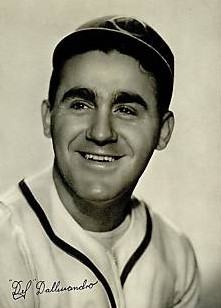
Nicholas Dominic Dallessandro was born on October 3, 1913 at Reading, Pennsylvania. The short 5’ 6’ outfielder had tiny feet & one sports writer joked it took him 20 jumps to get out of the dugout. He earned the nickname “Dim Dom” making his debut with Boston in 1937 batting .231 in 68 games.

He went to the Pacific Coast League playing with San Diego until the Cubs bought his contract in 1939. He played in 107 games for the 1940 Cubs, batting .268 with a HR & 36 RBIs. The next season would be his career best batting .272 with 6 HRs, 85 RBIs (10th in the league) 36 doubles (4TH in the league) & the second best fielding percentage in the outfield at .987. He posted a .362 on base percentage drawing 68 walks as well. The next two years he played under 100 games both seasons batting a best .261 in 1942.

In 1944 he rebounded to play in 117 games batting .304 in 381 at bats, posting a .400 on base percentage (7th in the league) hitting 8 Hrs with 19 doubles with 61 walks & 74 RBIs. He had 9 assists & 2 double plays from the outfield posting a .980 fielding percentage.

In 1945 he went off to World War II returning to play his last two seasons as a Chicago Cubs reserve outfielder. He spent the rest of his career in the Pacific Coast League until 1952. In an eight-season career, Dallessandro was a .267 hitter with 520 hits 22 HRs, 110 doubles, 23 triples & 303 RBIs in 746 games. He was a disciplined hitter posting a career .369 on-base percentage.

Passing: Dom passed away in 1988 at Indianapolis at age 75.

Sep 29, 2012

Former Mets First Baseman: Dave Magadan (1986-1992)

David Joseph Magadan was born September 30, 1962 in Tampa, Florida. Magadan was originally drafted by the Boston Red Sox in 1980 but chose to stay in school instead. He was the MVP of the American Legion World Series, and then attended the University of Alabama where he won the Golden Spikes Award in 1983. He helped the Crimson Tide get to the College World Series where he faced Calvin Schiraldi & Roger Clemens. He was selected College Player of the Year by Baseball America and got signed by the New York Mets, as a second round pick in 1983.

Magadan was pure natural hitter, batting well over .300 at all minor league levels, getting a cup of coffee to te big leagues in September of 1986. He came up as a third & first baseman making his Mets debut on September 7, 1986. He got his first start on September 17th, the night the Mets clinched the 1986 NL East title. Magadan went 3-4 with 2 RBIs, as everything seemed to go well for the Mets in those days. He went 8-18 that September but was not eligible for post season play.

In 1987 he hit a pinch hit HR in his second game played, & strong May gave him a .323 average at months end. He hit well through the summer, including a four hit day at Shea against the Chicago Cubs on August 9th. Overall he got into 85 games, hitting .318, with 3 HRs 13 doubles 22 walks 24 RBIs & a .385 on base percentage. He showed good patience at the plate and didn’t strike out much, just 22 times in 192 at bats. Manager Davey Johnson tried to get him in the lineup as often as he could although it was tough with Keith Hernandez at first & Howard Johnson at third base.

In 1988 he had a bad start hitting just .209 by early June. He then hit safely in 30 of his next 35 games, and was up at .314 near the All Star break. He then dropped off to a bit to finish with a .277 average in 314 at bats, he hit 1 HR with 15 doubles with 35 RBIs. He played in 71 games at first base behind Keith Hernandez posting a .988 fielding % & 48 games at third base making 4 errors in 83 chances. In the 1988 NLCS he went 0-3 as a pinch hitter in three games.

In 1989 he got into 127 games as injury as age began to catch up to Keith Hernandez. On May 13th his 11th inning RBI single off San Diego’s Greg Harris was a game winner walk off for a Mets win. Three weeks later on June 3rd he hit a walk off HR in the 11th inning against the Pittsburgh Pirates. On the 1989 season Magadan batted .286, with 22 doubles, 4 HRs 49 walks a .367 on base % & 41 RBIs, while posting a .991 fielding percentage playing a solid first base.

By 1990 Magadan became the Mets everyday first baseman by June, beating out Mike Marshall for the job when he was hitting over .300. On June 12th he had a huge day at Wrigley Field gathering up four hits with six RBIs and a HR in the Mets 19-8 win. He got three more hits the next day & then in the next three game series at Pittsburgh he had eight hits with another four hit day on June 15th.

He closed out the month hitting safely in 15 of 16 games with nine multiple hit games raising his average to .361 by July 1st. Hit continued hitting well through the rest of the year hitting .328 (3rd in the league), posted the leagues 2nd best on base percentage (.417). He drew 77 walks (8th in the league) & had 10 sacrifice flies (5th in the league). He hit 28 doubles, with 6 HRs, & 72 RBIs.

Overall he played in a career high 144 games in the 1990 season with 10 sac flies (5th in the NL). At first base he led all first baseman with a .998 fielding percentage, making only two errors in 903 chances with 113 games at that position. He was never able to put up the same kind of numbers again, dropping to a.258 average the next year, although he still posted a strong .378 on base percentage. He was the Mets main first baseman that season although the team finished a disappointing 5th.

1992 would be his last season as a Met; he brought his average back up to .283 with a .390 on base percentage, although he was limited to playing only 99 games. The Mets had acquired Hall of Famer Eddie Murray for first base, & Magadan was moved over to third base full time. He had been playing a small number of games at that position for the past few seasons. He posted a .941 fielding percentage making 11 errors in 187 chances. The Mets didn’t resign him in 1993 as Howard Johnson came back to third base after playing in centerfield the previous year. Magadan signed on with the expansion Florida Marlins as a free agent for 1993.

There he batted .286 with 4 HRs 12 doubles & 44 RBIs in 66 games before being traded to the Seattle Mariners that June. He was traded back to Florida batting .275 in 74 games played behind Jerry Browne who hit .295. Magadan then signed a one year deal as a free agent with the Houston Astros in 1995 where he hit .313 with 24 doubles 2 HRs 51 RBIs 71 walks & a career high .428 on base %. After a year in Chicago with the Cubs (78 games batting .254), he went to the Oakland Athletics for two seasons.

In 1997 he hit over .303 with a .414 on base % in 128 games. The next season he missed alot of action playing in only 35 games but batted .321. In 1999 he was a member of the NL Western Champion San Diego Padres, batting .274 with 2 HRs 12 doubles & 30 RBIs. He stayed in San Diego for three seasons finishing out his career there in 2001.

In his 16 year playing career (1582 games) he had 1197 hits, batting .288, with 218 doubles 13 triples 42 HRs & 495 RBIs posting a .390 on base percentage putting him at #101 all time. At first base he posted a .994 fielding % (60th all time) making 28 errors in 4344 chances. At third base he posted a .951 fielding % with 71 errors in 1449 chances turning 84 double plays.

Retirement: After his playing days, he first became the San Diego Padres hitting coach (2003-2006). He then became the Boston Red Sox hitting coach (2007-through the present 2011) winning a World Series there in 2007, as his team batted .333 in the Series. In his first season as their batting coach the team improved in batting average (.269 to .279), slugging percentage (.435 to .444) and on base percentage (.351 to .362), leading the American League with 689 walks.

In 2008 they led the league in walks & on base % coming in second with a .280 batting average. In 2009 he was suspended for one game after arguing balls & strikes with umpire Bob Davidson, that season the Sox fell to 4th with a .270 batting average, coming in second in doubles, walks, slugging & on base %.

In 2010 they were 5th with a .268 batting average, but second in HRs, runs scored & slugging. In 2011 the Red Sox finished second in hitting with a .280 batting average. They were first in hits, runs, doubles, slugging & on base % in the AL. The Red Sox collapse at the end of the season got Manager Terry Francona fired as the team did not make the post season.

In 2012 Magadan became hitting coach under Bobby Valentine, the Sox were 5th in batting by mid September, wlthough the team as a whole is under .500 & will not make the post season.

Family: Magadan is the cousin and godson of manager Lou Piniella. Dave has two sons from his first marriage & has a daughter with his wife Monique to whom he has been wed since 2000.

Former Mets Pitcher: Mark Guthrie (2002)

Mark Andrew Guthrie was born September 22, 1965 in Buffalo, New York. He attended high school in Venice, Florida then went to LSU, getting signed in the 7th round of the 1987 draft by the Minnesota Twins. Two years later the left hander was in the big leagues with the Twins, beginning his career as a starter. He would win seven games two straight years then eventually become a middle reliever.


He appeared in the 1991 post season with the Twins, pitching two games in the ALCS, earning the win against the Toronto Blue Jays in Game #3 after pitching a scoreless 9th inning. In the World Series he took the loss in Game #4 at Atlanta giving up a 9th inning triple & an intentional walk. He gave the ball to Steve Bedrosian who allowed the game winning sac fly to the Braves Jerry Willard. Guthrie would get into five more post seasons in his career, pitching in 15 games going 1-2 with a 3.46 post season ERA.

Guthrie spent six years in Minnesota, then four seasons in Los Angeles with the Dodgers, the journeyman also pitched for the Boston Red Sox, Chicago White Sox, Tampa, Rays, Toronto Blue Jays & Oakland Athletics. He was a successful part of the 2001 wild card Oakland A's bullpen going 6-2 with 12 holds, one save and a 4.47 ERA making 54 appearances. That December he was traded to the New York Mets with pitcher Tyler Yates, in exchange for David Justice.

Guthrie pitched well for the 2002 Mets. He earned his first Mets win on June 16th, during a subway series game, where the Mets scored three runs in the bottom of the 8th inning on Mo Vaughn's three run HR. Guthrie was 5-0 through July with a tiny 1.05 ERA before taking his first loss in Arizona on August 4th.

Although he pitched well, he then lost his last three decisions of the year. Overall in 68 games he was 5-3 with 17 holds while posting a solid 2.44 ERA. He struck out 44 batters, while walking 19, allowing 13 earned runs in 48 innings of work.

Guthrie went to the Chicago Cubs in 2003 getting to another post season, going as far as the NLCS. He was the losing pitcher of Game #1 allowing an extra inning HR to Florida’s Mike Lowell at Wrigley Field.

It was his final season, at age 37, he ended a 15 year career going 51-54 with 14 saves & a 4.05 ERA in 765 games pitched.

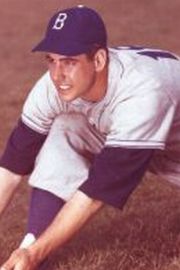
Former Italian / American Player of the Day: Bill Consolo (1953-1962)

William Angelo Consolo was born August 18, 1934 in Ohio. His family moved to the West Coast, settling in Los Angeles where his father was a barber at the Statler Hilton Hotel in downtown L.A. He grew up in Los Angeles a long time friend of Sparky Anderson. Consolo was named Los Angeles High School Player of the Year in 1951-1952.


He along with Sparky Anderson & Bill Lacheman played on the American Legion Nation Champion team in 1951. The game was played at Tiger (Briggs) Stadium. The shortstop was signed by the Red Sox as a bonus baby in 1953 right out of high school. The Red Sox supposedly enhanced their offer by arranging to purchase the barber shop confectionery at the Los Angeles Hilton on behalf of his father.

He would play for the Red Sox for as their Opening Day second baseman the following year, Consolo played in a career high 91 games but only hit .227. He would become mostly a utility infielder in his MLB career batting a career high .270 in 68 games in 1957. He told a story on how he hit an inside the park HR at Fenway Park but was called out for not touching second base. He stormed out of the dugout & told the umpire he was wrong, he touched second but missed third base.

He was traded to the Senators in 1959, and then moved on to Minnesota, Philadelphia, the Los Angeles Angels, & the Kansas City A’s before hanging them up in 1962. In a 10 year career he played in 603 games batting .221 with 9 HRs 83 RBIs.

Retirement: After his playing days, he became a barber just like his dad at the Statler Hilton Hotel in L.A. in the sixties. The hotel is now The Wilshire Grand Hotel. He returned to baseball coaching the Detroit Tigers under his old friend Sparky Anderson. He coached in Detroit from 1979 -1992 & again in 1995. Consolo passed away in 2008 at West Lake Village, California at the age of 74.

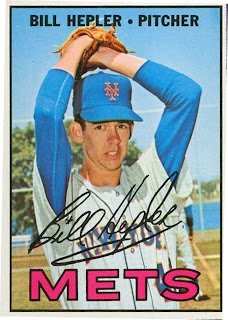
Mid Sixties Mets Pitcher: Bill Hepler (1966)

William Lewis Helper was born September 25, 1945 in Covington, Virginia. Helper was a six foot lefty originally signed by the Washington Senators in 1960. He was a promising young pitcher whose career was cut short due to arm troubles. He was 11-0 averaging 19 strikeouts a game in American Legion ball, then was a New York Penn League All Star leading the league in wins & strikeouts. He was scooped up by the New York Mets at the 1965 Winter Meetings and immediately made the team at the young age of 20.

Hepler debuted on April 23rd 1966 against the Braves in Atlanta where he gave up two walks & a hit in one inning pitched. He made twelve other relief appearances in May & June before he got his first MLB win two months later. The win came against the Braves in Atlanta when Ted Abernathy botched a pick off attempt allowing Billy Murphy to score the tying run. Then Ken Boyer’s sac fly drove in what was the winning run. The Mets Jack Hamilton saved it for Hepler as he earned the win.

Overall he appeared in 37 games for the ’66 Mets, mostly in relief, starting three games. His longest & best outing came in a start in July at Shea Stadium vs. the Houston Astros, although he got no decision. Hepler went seven innings, allowing only one run on four hits, walking five. On the season Helper made 37 appearances going 3-3 with a 3.52 ERA, 25 strike outs, 51 walks in 69 innings pitched.

The next season he was in the minors pitching at both the A & AA levels. He won two games in the Carolina Championship Series for the Durham Bulls that season as they won the title. He went 4-4 for the Bulls during their regular season with a 4.25 ERA. Hepler was 9-6 at AA Memphis in 1968, tied for second on the team with Jerry Hinsley behind Rich Folkers (13 wins).

Arm trouble set him back and after the 1969 season he was traded to the Kansas City Royals. He was forced to retired, never recovering to top form or making the majors again.

Sep 28, 2012

Mid Nineties Mets Outfielder: Bernard Gilkey (1996-1998)

Otis Bernard Gilkey was born on September 24, 1966 in St. Louis Missouri. The hometown baseball star signed with the St. Louis Cardinals as an amateur free agent in 1984. It took the six foot right hand hitter to get to the major leagues, after batting .295 at AAA Louisville in 1990. In 1991 he was back at AAA but then got to the big leagues for good seeing action in 81 games that year with the Cardinals.

By 1992 he was the teams regular left fielder hitting over .300 for two straight seasons. In 1992 he hit .320 with a .364 on base % while stealing 15 bases. In 1993 he hit .305 hitting 40 doubles (6th most in the NL) & scored 99 runs. In the outfield he led all left fielders with 19 assists, was third in put outs (207) .

After leaing the league with five errors in left in 1992 he was second with eight in 1993. After an off year during the 1994 baseball strike shortened season where he hit just .253, he improved to .298 (with a .358 on base %) by 1995. That year he hit 17 HRs with 69 RBIs & 12 stolen bases. In the off season he was traded to the New York Mets for Eric Ludwig & a pair of minor leaguers.

Gilkey went on to have his best season in a Mets uniform in 1996. He started out hitting a HR on Opening Day against his old St. Louis Cardinal teammates in his Met sdebut at Shea Stadium. In the bottom of the 7th inning he then contributed with a four run Mets rally by tying the game with an RBI single. Gilkey hit another HR the next day driving in all three Mets runs in a 5-3 loss. He would hit safely in his first eight games, driving in runs in his first four. In April he hit safely in 18 out his first 21 games, batting .333 with 6 HRs & 23 RBIs by the end of the month.

 It was quite an impressive start in New York. On May 21st he hit a HR & drove in all four Mets runs in Los Angeles but the Mets lost 6-4 to the Dodgers. A week later on May 26th he drove in the only run of a 1-0 win at Shea Stadium over the San Diego Padres. The win gave Bobby Jones his 5th win against one loss. Overall in May he stayed hot driving in 24 more runs, and was hitting .315 at the end of the month. In June he added a ten game hit streak and continued to drive in runs. On July 16th he drove in three runs including hiting an 8th inning HR off Curt Schilling in the Mets 6-3 win over the Phillies at Shea. He was consistent throughout the season, never falling below the .300 mark.

During the final week of July he hit six HRs with 9 RBIs including a pair of multiple HR games. On a west coast road trip to California from August 16th through August 25th he had fourteen hits, with six doubles, while driving in sixteen runs. In the three game visit to San Francisco he drove in runs in all three games totaling seven RBIs. He ended the road trip with a three run HR in Los Angeles off Ismael Valdez.

In September when the Dodgers came to Shea, he hit HRs & drove in runs in back to back games. He he closed out the year hitting safely in 16 of twenty games for the 4th place New York Mets. He finished the year leading the team with 117 RBIs (eighth in NL). He batted .317 (also eighth best in the league) while finishing second on the club to Lance Johnson.

He set a Mets club record at the time by hitting 44 doubles (4th in the NL) while gathering 181 hits with 30 HRs 73 walks a .393 on base % & stealing 17 bases playing in 153 games. In the outfield he played very well defensively, leading the league for the second time in his career in assists (18) posting a .982 fielding percentage (3rd best in the NL).

Gilkey’s great hitting season was over somewhat shadowed by two other Mets who set records of their won. Todd Hundley hit 41 HRs the most by a catcher in a single season, & Lance Johnson set Mets records in hits (227) & triples (21).

Gilkey’s good year did get him some respect, ranking him # 14 in the MVP voting. His celebrity legacy in New York was captured by Hollywood in the 1997 movie, “Men in Black”. In the film he gets hit in the head with a fly ball while looking up at the big space ship over Shea Stadium, on its way to the 1964 World’s Fair Unisphere, in Flushing Meadows Park.

Unfortunately, he was never able to match those numbers again; the next season was Bobby Valentines first full year as manager & things began to change. Gilkey struggled especially in the first half of the season, batting just .211 by the All Star break. On July 19th he hit a three run HR breaking a 2-2 tie, against Cincinnati’s Bret Tomko leading the Mets to a 5-3 win over the Reds. Another highlight came on September 13th when he hit a three run walk off HR in the bottom of the 9th inning against Mike Thurman & the Montreal Expos.

Overall in 1997 his average dropped to .249 with a .338 on base %, striking out 111 times. He still hit 17 HRs with 33 doubles 78 RBIs and led the league in sacrifice flies with 12. Once again he was one of the league's best left fielders, leading the NL in assists (17) for the second straight year, posting a .989 fielding % (3rd best in the NL).

In 1998 he started out well, batting .314 with nine RBIs at the end of April. He missed two weeks of action in May, then In the final week he had 14 hits, hitting safely in seven straight games. In that stretch he had five multiple hit games bringing his average back up to .291. From there he fell into a big slump & after 82 games mid way through the season he was hitting .227 with 4 HRs 15 doubles & 28 RBIs.

Only July 31st, he was traded along with Nelson Figueroa to the Arizona Diamondbacks for Willie Blair & Jorge Fabregas. In 1999 he hit .294 in 94 games as a fourth outfielder, with the first place Western Division Champion Diamondbacks. He faced off against his old Mets team mates in the NLDS, going 0-6. After two brief stops with the Boston Red Sox (2000) & the Atlanta Braves (2001) he ended his career at age 35.

In a twelve year career Gilkey played in 1239 career games batting .275 with 1115 hits 118 HRs, 244 doubles 24 triples 606 runs scored 115 stolen bases 546 RBIs & a .352 on base %. He played in 966 games in left field (64th all time) making 102 assists (25th all time in LF) making 1798 put outs there (61st all time) posting a .982 fielding % (57th all time).

Former Mets Relief Pitcher: Mike DeJean (2004-2005)

Michael Dwain DeJean was born on September 28, 1970 in Baton Rouge, Louisiana. The right handed Cajun boy was drafted out of the University of West Alabama in the 24th round in 1992 when he was still a shortstop. He was soon converted to a relief pitcher, and saved 16 or more games four times at various minor league levels.

He made the big leagues by 1997 debuting with the Colorado Rockies, going 5-0 with two saves & a 3.99 ERA in 55 appearances. He stayed in Colorado for four seasons, mostly as a mid reliever.

In April 2001 he was Traded along with Mark Leiter and Elvis Pena to the Milwaukee Brewers for Juan Acevedo, Kane Davis and Jose Flores. In Milwaukee he became a closer, saving 27 games with 1-5 record in 2002. He posted 18 saves in 2003 when he found himself traded to the St. Louis Cardinals toward the end of the season. From there he became a journey man middle reliever, going to the Baltimore Orioles where he was 0-5 before getting traded to the New York Mets in July 2004 for Karim Garcia.

Dejean made his Mets debut at Shea Stadium, on July 20th in a game against the Florida Marlins. He would pitch five scoreless innings, getting credit a hold in three appearances on that same home stand. He pitched well enough to post a 1.69 ERA with 24 strike outs in 21 innings pitched in 16 games with New York for the season.

In 2005 he earned an extra inning win, when Jose Reyes singled home Victor Diaz with the games winning run. In May he earned two more victories in a weeks time, pitching less than inning of work each outing.

On June 20th The Mets released him & he was picked up by the Rockies once again. Overall for the '05 Mets Dejean made 28 appearances going 3-1 with two holds, 17 strike outs in 25 innings pitched but had a high 6.21 ERA, allowing 36 hits & 18 earned runs. He finished his ten year career there that season, at age 35.

Lifetime he was 30-33 with 52 saves, 446 strike outs & 292 walks in 623 innings of work over 565 games pitched, posting a 4.30 ERA. Retirement: Mike runs his own baseball & softball academy in Monroe, Louisiana.

Short Time 2006 Mets Pitcher: Jose Lima (2006)

Jose Desiderio Rodriguez Lima was born in the Dominican Republic on September 30, 1972. He was originally signed by the Detroit Tigers in 1989, making his debut there in 1994. The colorful, animated pitcher, pitched there for three seasons, going 8-16 with three saves. He began as a started but by 1996 was put in a relief role.

In 1997 he was traded to the Houston Astros along with Brad Ausmus, Trever Miller, C.J. Nitkowski and Daryle Ward in exchange for Doug Brocail, Brian Hunter, Todd Jones, Orlando Miller and cash. In Houston Lima would have his best seasons. He had a successful 1998 season, winning 16 games (16-8) tenth most wins in the NL. He posted a .667 win loss % also tenth best in the league. He posted a 3.70 ERA pitching in 233 innings. At the plate he even hit .138 driving in four runs.

He went on to have his best season in 1999, making the All Star team, going 21-10 (2nd most wins in the NL). He lead the NL in starts, posting a 3.58 ERA (9th in the NL) striking out 187 (7th in the NL) batters pitching in 246 (3rd in the NL) innings & throwing three complete games. When he started games, the fans in Houston would call it “Lima Time”.

In the post season he lost Game #2 of the NLCS 5-1 to the Atlanta Braves & Kevin Millwood. Even in those successful seasons he allowed over 100 runs both times & gave up over 30 plus HRs.

In 2000 the roof fell in on him he lead the league in earned runs (145) & HRs (48) going 7-16 with a huge 6.65 ERA. 2001 wasn’t much better (6-10 5.54 ERA). The wacky Lima was always up to something zany. Whether it was dying his hair light blonde, or sporting braids, he was always joking & smiling on any team he was with.

On the mound he was very emotional, pumping his fist or yelling up to the sky with some kind of emotion. It seemed no one enjoyed Lima Time more than himself. Over the next few years he was a spot starter & reliever for Detroit (again) Kansas City, Los Angeles & the New York Mets never regaining his top form.

In 2003 he was with the Newark Bears in the Atlantic league but got a break when the Royals came and grabbed him. The next season in L.A. (2004) he did go 13-5 although he posted a 4.07 ERA, allowing 33 HRs & 77 earned runs in 170 innings. In 2005 he posted the highs ERA of all time for a pitcher with 30 or more starts at 6.99. In February 2006 the Mets gave him a shot, and he began the year with the AAA Norfolk Tides.

He got called up when the staff needed some help in early May, but the Lima experiment didn’t last too long. Lima debuted as a Met on May 7th, getting the start at Shea Stadum against the Atlanta Braves. He allowed five runs on seven hits in five innings of work earning the loss. In his next start the Brewers roughed him up for five runs in Milwaukee in 9-6 Mets loss. On May 18th he took the mound in St. Louis but was gone in the 5th inning as well giving up five runs (four earned) in a 6-3 loss.


He was designated for assignment by May 20th, but then got another shot on July 4th. In his final start the Marlins pounded him as pitcher Dontrell Willis even blasted a grand slam off him. He went 0-4 with a 9.87 ERA allowing 19 earned runs, & 10 walks in just 17 innings pitched. His career was finished at the end of the year, and there was no more Lima time.

In his 13 year career Lima was 89-102 with five saves & a 5.26 ERA. He had 980 strikeouts, with 393 walks in 1567 innings of work in 348 appearances. He allowed 917 earned runs, & 267 HRs in that time.

Retirement: After his MLB playing days, he played in the Independent League, Korea & Dominican winter ball. He sang the National Anthem during his time in L.A. & wanted to peruse a singing career.

On May 22, 2010 he suddenly passed away from a heart attack, he was 37 years old. Later that night in Philadelphia, friend & Red Sox slugger David Ortiz wrote R.I.P Lima on his cap during a Sox – Phillies game.

Sep 27, 2012

Early 2000's Mets Back Up Catcher/ First Baseman: Jason Phillips (2001-2005)

Jason Lloyd Phillips was born on September 27th, 1976 at La Mesa, California. Phillips went to San Diego State University getting drafted by the New York Mets in the 24th round of the 1997 amateur draft. He hit 16 HRs with 71 RBIs between A ball St. Lucie & AA Binghamton in 1999 but hit just .248.

In 2000 he hit over .300 with the St. Lucie Mets & at AA Binghamton throwing out 40% of base runners attempting to steal. In 2001 he batted .293 at Binghamton getting promoted to AAA Norfolk. He was batting .303 at there after 19 games when he got the big league call up.

The strange looking fellow with the goggle glasses & goatee beard debuted on September 19th as a defensive replacement for Mike Piazza. In that 9th inning he was the battery mate for three brief September Mets; Dicky Gonzales, Tom Martin & C.J. Nitkowski. In just six games he was 1-7 during his September cup of coffee.

In 2002 he was batting .282 after 88 games at AAA Norfolk and was brought up again at the end of the season. In his first game that season he drove in a run going 1-3 in the second game of a double header against the Florida Marlins. On September 12th he hit his first career HR, it came at Olympic Stadium in Montreal in a 8-2 Mets win. Phillips showed some promise batting .368 (7-19).

By 2003 he playing more at first base (84 games) that at catcher (24 games). Vance Wilson was the main backup catcher & saw a lot of playing time due to Mike Piazza’s injuries. Phillips put in a solid year with career highs in batting (.298) hits (120) HRs (11) doubles (25) walks (39) & RBIs (58) while posting a .373 on base percentage. He threw out 33% of would be base stealers & only made one error in 155 chances, posting a .994 fielding percentage. At first base he posted a .990 fielding %.

During a May California raod trip he drove in runs in back to back games at San Francisco. In the second game he hit a three run HR helping the Mets to a5-1 win. On June 6th during an interleague game at Shea against the Seattle Mariners he broke a 1-1 tie hitting a HR off Ryan Franklin. The Mets went on to a 3-2 win. One of his biggest thrills was a game winning walk off single against Terry Adams & the Philadelphia Phillies on July 13th at Shea Stadium. 

That month he had a 12 game hit streak & had four different three hit games, coming at Philadelphia, Montreal & at home. He finished the month off batting at .322 on the season.

Phillips was one of the slowest runners in the game & that season grounded into 21 double plays (6th most in the NL).

In 2004 he saw the most time behind the plate as Mike Piazza was placed at first base to try to prolong his hitting career. Phillips played in 87 games at catcher, Vance Wilson played in 69 games & Piazza caught in 50 games.

Phillips struggled at the plate, hitting nowhere near his previous year’s numbers; he batted just .218 with 7 HRs 18 doubles & 34 RBIs in 128 games. In mid May he had a three RBI day against the Astros in Houston & then drove in runs in five of his next six games. On May 30th he hit a pair of HRs in a 8-6 loss to the Marlins in Florida. The next day he hit yet another HR in a 5-3 win at Philadelphia. 

In the off season the Mets acquired Ramon Castro & the solid defensive catcher Mike DiFelice to back up Piazza, as Wilsons days were numbered.

In Spring Training of 2005 he was traded to the Los Angeles Dodgers for Kaz Ishii. In Los Angeles he played in 128 games, becoming the Dodgers main catcher. He hit 10 HRs with 20 doubles & 55 RBIs while batting .238. He threw out only 20% of would be base stealers posting a .991 fielding percentage, also seeing some action at first base. He was granted free agency as Russell Martin took over the Dodgers catching duties for 2006. Phillips signed in Toronto with the Blue Jays and got a few breaks remaining on the club on for two seasons.

In 2006 he saw some action when main catcher Greg Zaun went down with injury. Then later in the year was brought up to replace Shea Hillenbrand’s roster spot. Phillips saw action in 25 games as a utility player batting .250. In 2007 he got a chance to play when more Bengie Molina left Toronto for free agency. He played in 55 games batting just .208 playing (158 at bats) in his last season in the majors. 

After his MLB playing days he played one season in the Australian Baseball League, then eventually in the Atlantic League with Camden. He would sign a deal with Atlanta playing at the AAA level for the Braves but was released.

In February 2009 he received an invitation to the Seattle Mariners spring camp. He didn’t make the Mariners club but was offered a job as bullpen catcher. He finished his seven year big league career batting .249 with 344 hits in 465 games played, 30 HRs 77 doubles, 168 RBIs & a .994 fielding percentage, throwing out 21 % of would be base stealers.

Retirement: During a warm up practice one day, in he made eye contact with a girl in the stands; they kept looking at each other throughout a game. Phillips tossed her a ball with his number on it & she texted messaged him and the two decided to meet. Soon they were deep in love, and got married in June 2010 at a ceremony held in the bullpen at Safeco Field. Phillips is the older brother of San Diego Padre Kyle Phillips.