Jun 30, 2012

Original 1962 Mets Pitcher: Craig Anderson (1962-1964)

Norman Craig Anderson was born July 1, 1938 in Washington D.C. The six foot right-handed pitcher attended Lehigh University, where he became the school's star pitcer. Anderson struck out 289 batters in 189 innings and pitched a no hitter there as well. He became the first player to make it to the big leagues from Lehigh University when he was signed by the St. Louis Cardinals in 1960. He briefly pitched in the minor leagues at AA Tulsa, posting a 1.68 ERA, getting brought up to the majors that same year.

He debuted on June 23rd pitching three scoreless innings in relief of Ernie Broglio, while earning his first career victory against the San Francisco Giants. In that game he got a hit scored a run & benefited from a grand slam by Stan the Man Musial. He would go 4-3 with a save & posting a 3.26 ERA with St. Louis in his rookie season. In October of 1961 he became an original New York Met when he was the 16th selection in the expansion draft.

Anderson made his Mets debut In the third game of the teams history, relieving Al Jackson in the 8th inning at the Polo Grounds. That day he pitched two scoreless innings allowing two walks & two hits. On April 24th, 1962 he gave up four runs (two of them earned) taking his first loss of the year, coming at Cincinnati to the Reds. On May 6th, he entered a game in the 8th inning & pitched four innings to the 11th. He earned his first victory as Gil Hodges singled home the winning run in the Mets top of the 11th. The win would be the start of a personal career best three straight wins in three straight appearances.

His biggest day came on May 12th at the Polo Grounds in a double header against the Milwaukee Braves. At this point in time the team was 5-12, but on this day they would take both ends of a double header from the Braves, enjoying the most exciting day in their short seventeen game existence . Craig Anderson would make Mets history by getting the wins in both games.

In the first game he relieved Roger Craig in the 7th inning with the Braves ahead 3-2. After pitching two scoreless innings, Hobie Landrith came to bat & hit a two run pinch hit walk off HR off future Hall of Famer Warren Spahn, to win the game. In the nightcap Anderson was the last of six Mets pitchers to take the mound, pitching a perfect 9th inning in a 7-7 tie.

In the bottom of the 9th inning, local hero Gil Hodges hit his own dramatic walk off HR to win the second game. It was like a World Series victory for the 20,000 fans in attendance at the Polo Grounds on that day. Anderson would save two games on the road in Milwaukee the next week, and have a 3-1 record with three saves & a 2.08 ERA.

Unfortunately from that point on, he would go on to lose his next 16 decisions on the season, and never earn another victory in his big league career. He would lose three games in June, and get a start at the end of the month. He never got the second out of the inning, as he allowed six runs (four earned) to the Pirates in Pittsburgh, as the Mets took a horrible 13-3 loss. Anderson then took four losses in July, although two of them were complete games where he allowed just three runs each time. In August he lost starts to The Phillies, Reds, Dodgers & Cardinals. In September he was in the bullpen, blew one save earned another & took a loss.

He finished the 1962 season leading the team in appearances with 50. He was 3-17 (sixth most losses in the NL) with a 5.38 ERA, allowing 78 runs on 150 hits, walking 63 batters, while striking out 62 in 131 innings pitched. He spent most of 1963 in the minors going 9-12 at AAA Buffalo, getting a September call up at the end of the year. He made the start in the last game ever played at the Polo Grounds on September 18th, 1963. Although he left in the fourth inning, he took the loss, allowing three runs on five hits to the Philadelphia Phillies.

He spent part of May 1964 with the Mets, pitching in just four games. On May 24th he took a loss to the Houston Colt 45’s at the Astrodome in his only start that year. That loss gave him 19 straight losing decisions (over the past three seasons) breaking Roger Craig’s record of 18 straight losses, set in the Mets inaugural season, 1962.

Anderson’s consecutive loss record held for three decades, until Anthony Young lost 27 straight decisions in the early 1990’s. During that period, Anderson sent Young a message of encouragement when he finally snapped the losing streak. He sent him a message saying “I hope you win 27 in a row” signed Craig Anderson- ’62 Mets.

Anderson went back to AAA Buffalo in 1964 and won 12 games, going 12-7 with a 2.96 ERA. He never got back to the big leagues, pitching two seasons in the minors before retiring from playing in 1966. In his four year MLB career, Anderson pitched in 82 games, going 7-23 with a five saves & a 5.10 ERA. He struck out 94 batters in 192 innings, walking 81 batters & pitched two complete games.

Retirement: He then went back to Lehigh University serving as athletic director & baseball coach for 34 years. He now lives in Dunnellon, Florida & serves as a substitute teacher. He says the teaching keeps him young. Anderson has appeared at three Original Mets reunions & autograph signings shows.

Former Mets Infielder: Wilson Valdez (2009)

Wilson Antonio Valdez was born May 20th, 1978 in Nizao Peravia Dominican Republic. The five foot eleven infielder was originally signed by the Montreal Expos in 1997. After six minor league seasons and some moving to various organizations, he got a call up with the 2004 Chicago Whites Sox. He was placed on waivers & picked up by the New York Mets but was quickly traded to Seattle.
He saw action in 42 games batting just .198 & then was traded to the San Diego Padres. He briefly ended up with the Los Angeles Dodgers in 2007, then went on to Pitch in Korea for 2008. He signed as a free agent with the Cleveland Indians but was purchased by the New York Mets in May 2009.

Valdez debuted with the Mets on May 27th 2009 as a pinch hitter going 0-1 in a game against the Washington Nationals. On June 1st he tripled & doubled driving in three runs in a Mets 8-5 loss to the Pirates in Pittsburgh. At the end of July he was batting .244 & was sent down to the minor leagues until late August. When he returned he saw a lot of September action, playing in 22 games that month.

On the year he played in 41 Mets games, (32 at short stop, two in the outfield, one at second & one at third) batting .256 with no HRs seven RBIs & a .326 on base %. After the season he signed on a as a free agent with the Philadelphia Phillies where he spent two seasons as a utility player.

In 2010 he played in 111 games batting .258 with 4 HRs & 35 RBIs. In the post season he appeared in three games going 1-3 in both the NLDS & NLCS. In 2012 he was traded to the Cincinnati Reds.

Former MLB Pitcher & AA Binghamton Official Scorer: Steve Kraly

Steve Charles Kraly was born on April 18t, 1929 at Whiting, Indiana. The five foot nine left hander was signed by the A.L. New York club in 1949 at the age of 20. In the minor leagues he was a roommate of Mickey Mantle winning 18 games at Joplin in the Western Association. At Binghamton he was a 19 game winner & became a local star pitcher. He would settle in the area, get married & raise his family there.

Kraly went 19-2 over 22 starts for the Binghamton Triplets before receiving a promotion to the big league club. He would pitch just two games and go 0-2 with a save appearing in five games. He earned a World Series ring but did not pitch in the Series. The next year his arm would tighten up between the tendons and doctors said it was a blood clot, which today is diagnosed as an aneurysm. He would pitch in the minor leagues through 1960 with the Reds, Phillies & Tigers organizations.

In 1956 he returned to Binghamton going 5-6 with a 4.55 ERA. In 1961 his old manager Casey Stengel offered him a contract with the expansion New York Mets. Although his wife suggested he sign, he chose to work a regular job & raise his two kids.

He took a job working at IBM for the next thirty years. In 1992 baseball returned to Binghamton as the Mets farm team took the field. Steve Kraly became the ball parks official scorer & hold that position for almost another thirty years.

In 2008 he was honored with throwing out the first pitch on Steve Kraly bobble head night. "I didn't even know I was being considered for a bobble head," said Kraly. "I had been out of town, and when I got back home people were calling me 'bobble head.' I said, 'What are you talking about?' No one had told me anything. But this is really neat. I have a World Series ring, but to be on a figurine is the ultimate. I'm especially honored that this came from the fans."

Jun 28, 2012

Ronald Alan Swoboda was born on June 30, 1944 in Baltimore, Maryland. Swoboda was the captain of his high school soccer team as well as a top player on the basketball & baseball teams. The six foot two right handed hitting outfielder was signed out of Maryland University, as an amateur free agent in 1963. He signed for $35,000 after a strong AABA tournament performance. Swoboda only played minor league ball for one seasons, impressing the Mets with his power 14 HRs at AA Williamsport & then 3 HRs at AAA Buffalo in 22 games. At times he was refered to as Rocky & Swobo.

He made the 1965 Mets team out of Spring Training and made his big league debut as a pinch hitter on Opening Day ‘65. In the second game of the year he hit his first career HR, a pinch hit blast over the bullpen wall, against the Houston Astros at Shea Stadium. He later claimed it was the longest shot he ever hit in his career. He got his first start against the San Francisco Giants in right field on April 18th & hit another HR that night off Gaylord Perry. Rocky hit two more HRs on the road in San Francisco the next week finishing up April with four HRs batting .333.

On May 8th he hit a pair of HRs & drove in all four Mets runs in their 4-2 win over the Milwaukee Braves. From May 16th through May 21st he drove in runs in five straight games & hit three HRs.

In a game against the St. Louis Cards in May 1965, the bases were loaded late in the game with the Mets ahead 7-2. Dal Maxvill hit a fly ball Swoboda lost in the sun, all the runners scored. He struck out when he came up to bat in the next inning & was clearly frustrated. He stomped on a batting helmet coming out of the dugout and crushed it as it got stuck on his foot. Casey Stengel came out, grabbed him & removed him from the game.

At the end of May he had already hit 11 HRs & was amongst the league leaders. It was quite a start for a team looking for a new star, & Swoboda became very popular very quick. He won over the fans hitting HRs & working hard to be a better player. He hit three HRs in July & then another three in August where he had a stretch of driving in runs in six straight games. He slumped in September without a HR all month.

Swoboda finished the year leading the team in HRs with 19, setting a Mets rookie record that stood until Daryl Strawberry came along in 1983. Although he only hit .228, striking out over 100 times, he drove in 50 runs & hit 12 doubles, becoming one of the better hitters on the weak hitting team. He had the honor of making the Topps All Star Rookie team & was touted as having a bright future.

He started out with uniform #14 until the Mets got veteran Ken Boyer & he then switched to #14. Later on in 1968 when Gil Hodges arrived he took over uniform #4 permanently. He became known as a below average fielder with good power. Casey Stengel said of him “He will be great, super, even wonderful, if he can learn to catch a fly ball”. Bud Harrelson once said he was afraid to go back on fly balls with Swoboda behind him, because Ron would get confused and run him over.

In 1965 he committed the second most errors in the league (11). In 1966 he struggled at the plate from the start, not hitting above the .200 batting mark until late May. It dropped below the .200 mark again and it wasn't until mid July when he brought it back up. That month he hit five HRs, one was a massive blast on the roof of Philadelphia’s old Connie Mack Stadium on the fourth of July. In that game he hit two HRs & drove in five runs helping the Mets to a 9-7 win in the first game of a twin bill.

Another memorable blast that month, was a two run 8th inning HR in Los Angeles off hurler Claude O’Steen, securing a rare Mets 3-0 shutout against the reigning NL Champions. He only hit one HR in August but it was another memorable one against an old New York club. On August 4th the Mets were trailing Juan Marichal & the Giants 7-1 in the 8th inning. They made a remarkable comeback topped off by Swoboda’s three run 9th inning walk off HR, giving the Shea Stadium fan a huge thrill.

He played in 112 games, in 1966 with 8 HRs 9 doubles & 50 RBIs batting .222 while striking out 76 times in 342 at bats posting a .296 on base %. In left field he improved to post the league's best fielding % (.985%) with seven assists (3rd most in the NL).

In 1967 he started out slow again, not hitting his first HR until June 6th. That was a 10th inning shot in Pittsburgh, off the Pirates Roy Face giving the Mets a 3-2 win. He would hit two more that week in games against the Chicago Cubs & Cincinnati Reds. He went on a hot streak where he raised his average up twenty five points that month. On a July 16th doubleheader against the Houston Astros at Shea Stadium, Swoboda hit HRs in both games as the Mets swept the twin bill. In August he hit safely in 17 of 18 games, getting his average up above .280, driving in 15 runs in the first two weeks of the month. He finished the year with career highs in batting (.281) & doubles (17), while hitting 13 HRs, with 53 RBIs and a .340 on base %.

In 1968 Gil Hodges took over as manager in New York & things began to change for the better. Swoboda started out the year with a bang, hitting a HR on Opening Day off Juan Marichal, driving in all four Mets runs, although they lost to the San Francisco Giants 5-4. Later that month he hit HRs in each game of a four game series against the Los Angeles Dodgers. His three run shot on April 20th off Bill Singer was enough for Tom Seaver to beat the Dodgers 3-2, while earning his first win of the season. He closed out the month of April among the tops in the league with seven HRs & 16 RBIs.

After the strong start, Swobo got some national media attention, making the cover of a May 1968 Sports Illustrated with the title "Slugger Ron Swoboda." After the hot start he began to hear the boo birds at Shea by summertime. Once with an 0-2 count he watched a third strike right down the middle. When he got back to the dugout, Gil Hodges asked him why he didn’t swing; Ron replied “I was guessing ball?” 

In one game Swoboda struck out five times, the fans cheered as he came up again. They cheered because they wanted him to break the record of striking out six times. He was quoted as saying “I should go home and blow my head off” in reply coach Rube Walker said “You’d probably miss”.

That off season Swoboda participated in the annual sports writers show putting himself in a straight jacket and promised to break free in 10 seconds. After eating his “Yaz” bread (named for Carl Yastrzemski in his Triple Crown season), he attempted to escape, but couldn’t. Ron never became the superstar he was expected to be but hit some memorable HRs & had a decent career.

Quotes: After striking out five times in one game, Ron Swoboda said, "They booed the hell out of me and if I was them I would have followed me home and booed me there, too.”

On July 23rd his 6th inning HR Off the Braves Pat Jarvis ended up being the game winner. Three days later he drove in both runs in a 2-0 Jerry Koosman shut out against the Reds at Shea. He always seemed to hit well against the old New York teams, that departed to California, the Giants & Dodgers. He helped the Mets to wins against both teams by having two more multiple RBI games against them that summer. On August 4th he broke up the Dodger's Mike Kekich’s no hitter, with the only hit of the day, a 7th inning single.

On August 20th he had a five RBI day against the Giants at Shea Stadium topped off by a two run HR off future Mets pitching coach Bill Monbouquette. That season he led the club in RBIs (59) triples (6 which were 8th most in the NL) & walks (52) while hitting 11 HRs with 14 doubles a .242 batting average & a .320 on base %. He struck out 113 times (6th most in the NL), grounding into 14 double plays.

In the outfield his strong arm had him make 14 assists (third most in the NL). He posted a .975 fielding % while making six errors.

In the miracle year of 1969 Swoboda was being platooned in right field by manager Gil Hodges. He played 78 games in right field & 23 games in leftfield. He shared time with Art Shamsky who hit .300 & Rod Gaspar who was a solid defensive late inning replacement. In April he hit well, batting .320 with seven multiple hit games & nine RBIs. On May 20th he hit a 7th inning HR off the Giants Mike McCormick, then put the Mets ahead for good with a two run single helping New York & Tom Seaver to an exciting 4-3 win at Shea Stadium.

Two days later in the last game of the series, he walked in the bottom of the 9th inning with the bases loaded scoring Bud Harrelson for the game winner & series sweep. When the California teams came to Shea in late August Swoboda got hot again. First he drove in two runs against the Giants then as the Dodgers rolled in, he greeted them with a two run HR in the first game of the series off Bill Singer, as the Mets won 5-3. Two days later he drove in four runs off Don Sutton, helping the Mets sweep the series in the midst of a six game win streak.

On September 13th he hit a grand slam HR at Forbes Field in Pittsburgh, helping Tom Seaver to a 5-2 win & his 22nd win of his Cy Young season. On September 15th, he hit another of his memorable HRs, this time off the St. Louis Cardinals Steve Carlton in a record setting game at Busch Stadium. That night Carlton set a record by striking out 19 batters, Swoboda being a victim twice himself. But Swoboda also spoiled Carlton’s effort by hitting a pair of two run HRs, driving in all four Met runs, in the 4-3 victory.

During the Mets August & September stretch drive, Swoboda drove in 30 runs, more than half of his season RBI total. He finished the year with nine HRs, eight doubles, two triples, a .326 on base % & 52 RBIs batting .252 playing in 115 games.

Post Season: He did not play against the right handed pitchers of the Atlanta Braves in the 1969 NLCS. But in the World Series he got to play against the Baltimore Orioles left handers. He arrived back in his home town of Baltimore, to play in the World Series, a huge thrill for the young outfielder. He had many friends & family in the stands cheering for him that day. 

As the Series opened Don Buford hit a HR over Swoboda’s head in right field as he fell back into the fence, on ball he may have been able to catch. In the 9th inning he got his first World Series hit off Mike Cullear.

In Game #4 back at Shea Stadium he had three hits off Culler and then two more in Game #5 against Dave McNally. His biggest came in the 8th inning of Game #5, when he doubled home Cleon Jones with what turned out to be the winning run, sealing the championship. In the World Series, Swoboda hit .400, and his six hits were the most by any player on either team. But his not remembered for his hitting, it was his great catch in Game #4.
                       
In the top of the 9th inning, Tom Seaver was tiring and the Mets holding onto a 1-0 lead. Frank Robinson and Boog Powell each singled for the Orioles, bringing up Brooks Robinson. Brooks blasted a drive toward right center that Swoboda raced for. He ran as far as he could, stretched, and made a full length diving backhanded catch. Swoboda looked in his glove, and there was the ball. He said to himself “that was one hell of a catch, and this is the World Series”.

The Shea crowd roared, and Tom Seaver sighed. Although Frank Robinson tagged and scored the tying run, Swoboda's catch stopped the go-ahead run from scoring. The Mets won the game in the 10th inning, Baseball Weekly later ranked the catch as one of the "10 Most Amazing Plays of All-Time." After all the years of poor play in the outfield and earning the name Rocky due to it, Swoboda had worked hard to get better. It all paid off in the big spotlight. 

Seaver and Swoboda never had the greatest relationship neither, it was ironic the play took place during his only World Series victory. A silhouette of Swoboda making his famous catch is featured at the right field gate section of Citi Field in his honor.

Swoboda was in the Mets Opening Day lineup in 1970,as the Amazing Mets raised the World Champions flag. In May he had a four RBI day on the 26th leading the way for a 5-1 win over the Cards. On July 9th he hit a grand slam HR off Montreal's Rob Nye leading Tom Seaver & the first place Mets to a 7-1 win at Shea. He hit three HRs in the last two weeks of July, hitting his last Mets HR on August 2nd in the night cap of a double header.

Overall he played 115 games in 1970, hitting .223, with two HRs, 8 doubles, 26 RBIs & a .340 on base %in 245 at bats. That winter the Mets decided young Ken Singleton was getting the right field job. Swoboda was traded to Montreal for centerfielder Don Hahn just before the start of the 1971 season.

Later that year, after 39 games in Montreal, the Expos traded Swoboda to the cross town rivals. Swoboda played there for three seasons (1971-1973) as a reserve outfielder. In 1973 he hit his last career HR, it was on September 12th off Boston's Roger Moret in a 7-1 loss to the Red Sox. In 43 at bats he hit only .116 and played his final game on September 30, 1973.

Swoboda finished his nine-year playing career, batting.242 with 624 hits, 73 HRs, 344 RBIs, 84 doubles, 24 triples a .24 on base % and 285 runs scored playing in 928 games. His lifetime slugging average was .379 and he averaged a home run every 36 at bats for the Mets. In the outfield (767 games) he posted a .972 % with 53 assists making 37 errors in 1308 chances.

Retirement: After his retirement he worked as a television sportscaster in New York on WCBS-TV and later in New Orleans on WVUE. Ron is currently the analyst for the New Orleans Zephyrs, the former AAA affiliate of the New York Mets. He worked there when they were the Mets farm team & still holds the position as they are now under the Florida Marlins organization. He still appears at baseball card shows and various Mets events.

In 1999 he appeared with other members of the 1969 Mets team on an episode of Everybody Loves Raymond. He was at the closing ceremonies of Shea Stadium in 2008 & the 40th anniversary of the 1969 team at Citi Field in 2009.

A silhouette of Swoboda making his famous catch is featured at the right field gate section of Citi Field in his honor

Former Met of the Day: Joe Grzenda (1967)

Joseph Charles Grzenda was born on June 8, 1937 in Scranton, Pennsylvania. The tall six foot two right handed pitcher was signed out of high school in 1955 by the Detroit Tigers. He went 13-3 in the Georgia Florida League in 1956 getting quickly promoted to AA ball. In 1958 he was 16-8 in the Southern Association (AA ball) with Birmingham. He posted losing record the next two seasons but got a call up to the big leagues in 1961 for four brief games.

He was back in the minors for the next three seasons becoming a full time relief pitcher. He was signed by the Kansas City Angels after getting released by Detroit. He never won a game in Kansas City, going 0-4 in parts of the 1964 & 1966 seasons, appearing in 41 games in those years. On August 14, 1967 his contract was purchased by the New York Mets.

The Mets put him to work right away the next day, pitching three innings in relief in both ends of a double header loss at Philadelphia. Two days later he entered the second game of a double header in Pittsburgh with the Mets leading 5-4 in the 9th inning. With two men on he gave up an RBI ground out to Roberto Clemente that tied the game. He pitched into the 12th inning giving way to rookie Tom Seaver, who gave up the game winning hit to Manny Mota in the 13th inning.

Grzenda would appear in just 11 games for the ’67 Mets posting no record and a 2.16 ERA, striking out nine batters in 16 innings pitched. In November his contract was purchased by the Minnesota Twins. He returned to the majors in 1969 going 4-1 with three saves, for the A.L. Western Champion Twins. He made one appearance in the ALCS against the Baltimore Orioles.

In 1970 he was traded to the Washington Senators for Brant Alyea. Over the next two seasons he found a home out of the Seantors bullpen. In 1970 he appeared in 49 games going 3-6 with six saves. He had a better year in 1971 going 5-2 with five saves, posting a 1.92 ERA in the teams last year in the nation’s capitol before moving to Texas.

In November he was traded to the St. Louis Cardinals ending his eight year career. Lifetime he was 14-13 with 14 saves posting a 4.00 ERA with 173 strike outs in 308 innings pitched in 219 appearances.

Former Italian / American Player With the Classic Name: John Boccabella (1963-1974)

John Dominic Boccabella was born on June 29, 1941 in San Francisco, California. His parents were Italian immigrants, coming over from Italy in the 1930's. His father was from Sampeyre near the border of France & his mother was from Tuscany in the hamlet of Sant' Angelo in Campo. He attended Santa Clara University and was drafted by the Chicago Cubs in 1963. He received attention & became more popular just because of his name. When he first came up to the Cubs out of their farm team in Pocatello, Idaho the Cubs broadcasters dubbed him “Boccabella from 'Pocatella'".

He started out his MLB career playing first base and was at one brief time considered to be the successor to Ernie Banks. He also played outfield then converted over to being a catcher, at the request of manager Leo Durocher. He stayed in Chicago for six years mostly as a reserve player, playing in 24 games or more in three of those seasons. In 1966 he played in 75 games, batting .228 with 6HRs & 25 RBIs. In 1968 he was drafted by the Montreal Expos as the 56th pick in the expansion draft. Strangely the previous year, his contract was purchased by the A.L. New York team but he was returned back to the Cubs.

As a kid I remember watching Mets games on TV when they played the Expos at Jary Park. I could never forget the way the P.A. announcer would recite Boccabella’s name. Sure enough, doing research on him, I found out that it was what everyone remembers!

The Jary Park announcer would love to play with Boccabella's name, using his French accent to intone "Jean BOCK-(pause)-a-BELLLLLL-aaaaaa" much to the delight of the Expos fans. He struggled mightily in the Expos inaugural season, batting .105 in just 40 games. He improved to .269 the next year playing in 61 games, giving credit to coach Lary Doby for his improvement. That season in June he hit a two run HR against the Houston Astros driving in both runs in the 2-1 Expo win. On September 2nd, he hit a dramatic walk off HR in a classic game against the Pittsburgh Pirates off pitcher Bruce Dal Canton. The game was recently aired on the MLB network.

By 1972 he was primarily the Expos main catcher, sharing time with Terry Humphries & Bob Stinson. He threw out 48% of would be base stealers, fourth best in the league. In 83 games he hit .227 with one HR & ten RBIs. In 1973 he caught 117 games behind the plate, throwing out 39% of would be base stealers, nailing 34 runners (fourth in the NL). He was third in the NL in assists (65), led the league in errors (14) & had 11 passed balls. He batted .233 with career highs in HRs (7) RBIs (46) doubles (13) at bats (403) & games played (118).

On July 6, 1973 in the first game of a double header he made history, by becoming one of three catchers, to ever hit two HRs in the same inning. He led off the 6th inning with a solo HR off the Astros Jim Ray, and then later in the inning hit a grand slam off Jim Crawford finishing off an eight run Expo rally. In the game he had three hits with the two HRs & five runs driven in, as the Expos beat Houston 12-8 at Jary Park.

His Expo Manager Gene Mauch, gave him a huge compliment calling him "one of the most underrated players in the league." He also said “He’s a very stoic individual. He leads a quiet life and nothing is going to change it. He exerts a quiet kind of leadership over our pitching staff that isn’t very visible, but you know it’s there.” “Boc is still the possessor of the softest hands and fastest release in the game".

After five years in Montreal he was traded to the San Francisco Giants in 1974 for pitcher Don Carrithers. During his last season in Montreal, he roomed with Rookie & future Hall of Famer Gary Carter, mostly in Spring Training. After 29 games in his hometown of San Francisco, and batting only .138 he was demoted to the minor leagues, ending his MLB career there that year. In 12 seasons he batted .219 with 320 hits 26 HRs 56 doubles 148 RBIs a .267 on base % & 117 runs scored. Behind the plate he threw out 40% of would be base stealers, posting a .984 fielding %.

Retirement: Boccabella is a religious family man, who never smoked & only drank wine, like a good Italian man. After his playing days he became a marketing representative for Pacific Gas & Electric in Marin County California.

Jun 27, 2012

45th Anniversary of The Odd Couple Movie Filming At Shea Stadium (1967)

On June 27th, 1967 Hollywood set up its cameras at Shea Stadium for a scene for the original movie version of “The Odd Couple”starring Walter Matthau & Jack Lemmon. Shea made it’s film debut in a game between the home town New York Mets & the Pittsburgh Pirates.
Originally Roberto Clemente was asked to be the batter in the movie scene, but he declined the part because he did not want to be portrayed as a weak hitter. Another Future Hall of Famer & star of the 1960 World Series, Bill Mazeroski took the part, getting paid $100 for his role.

The scene in the film takes place from the press box in the top of the 9th inning with the Mets holding onto a one run lead. Sports writer Oscar Madison is covering the game & gets an emergency phone call in the press box from his roommate Felix Unger. Oscar sarcastically comments to a sports writer while getting up, the Mets still have a chance if they make a triple play. On the phone call Oscar gets annoyed when Felix tells him not to eat too many hot dogs because he’s preparing dinner at home.

On the field during the phone call, Mets pitcher Jack Fisher pitches to Mazeroski who hits a bouncer to third baseman Ed Charles. Charles steps on third, throws to (Ken Boswell I believe) at second for one, who then throws over to Ed Kranepool at first, completing the triple play.

Legendary sports writer Maury Allen makes a cameo appearance & tells Oscar he just missed the greatest play he’s ever seen. Oscar yells into the phone at Felix “Are You Crazy, are you out of your mind?” A few Met players come out of the dugout to shake hands with the infielders.

Throughout the movie Oscar is seen wearing a Mets hat, which just goes to show you how popular the Mets were even before 1969. On the TV show, Jack Klugman’s Oscar Madison also often wore a Mets hat. Keep in mind the Odd Couple TV show began in 1970 & ran through 1975, a very good period in Mets history. Both Oscar characters had pictures of Mets players on their wall too.

The scene was filmed before a real game between the Mets & Pirates. When the actual game began, Mets manager Wes Westrum had Dennis Bennet take the mound against Pittsburgh’s Woodie Fryman. The Mets line up had Bud Harrelson leading off, Cleon Jones in center, Tommy Davis in left, Ron Swoboda in right batting clean up, Hawk Taylot behind the plate, Ed Charles at third, Eddie Kranepool at first, & Jerry Buchek at second.

The Mets hit Woodie hard in the bottom of the 1st, inning. Bud Harrelson lead off with a single, then Cleon Jones reached on base with an error. Tommy Davis then singled home Harrelson, & Ron Swoboda blasted a three run HR to put the Mets up 4-1. In the 2nd the Mets Jerry Buchek & the 9th place hitter- pitcher Bennet both singled. Bud Harrelson hit a sac fly ball that scored Buchek. In the top of the 4th inning, Bennet was replaced by Dick Selma after allowing two runs on seven hits with the Mets leading 5-2.

Selma earned his first win of the year by throwing 5 2/3 scoreless innings striking out four Pirates. On the big day of the movie, Bud Harrelson had three hits, Ron Swoboda & The Glider Ed Charles both had two hits each. The Mets win put them at 25-41 in ninth place, 17 games behind the St. Louis Cardinals who would go on to win the World Series, beating the Boston Red Sox in seven games.

Who Holds Mets Record For HRs In Consecutive Games: Richard Hidalgo (2004)

Richard Jose Hidalgo was born on June 28, 1975 in Venezuela. The big six foot three, Hildago was signed by the Houston Astros in 1991. He was considered an all around fast player until a knee issue hurt his speed. He was a fine outfielder with a strong throwing arm and good power at the plate. After three years he reached the AA level & then hit 14 HRs two straight years at AA Jackson. In 1997 he began the year at AAA New Orleans hitting 11 HRs batting .279 before getting called up.
He played parts of two seasons batting over .300 both times. His first full season was 1999 and he hit 15 HRs with 25 doubles 56 RBIs but only hit for a .227 average. After the season he had knee surgery & it helped his troubles at the plate. In 2000 he had a huge year as did many other bats in baseball during the so called "steroid era".

Hidalgo bashed 44 HRs (4th in the league) 122 RBIs (7th in the league) hit 42 doubles while batting .314 for the fourth place Astros. He struck out over 100 times for the second time and would do so four of the next five seasons. He never matched those totals again, but had a good year the next season with 19 HRs driving in 80 runs while batting .275. In 2002 he fell to a .235 average with 15 HRs playing in 114 games, missing time with an injury. Defensively he was a good outfielder leading the league in fielding percentage twice, once in left field (1999) & once in right field (2002).

In 2003 he led the league with 22 outfield assists & only made four errors, posting a .987 fielding percentage. He played in three post season series in Houston but only hit .118 (2-17) scoring a run in six games played. In June of 2004 Hidalgo came to the Mets for David Weathers & Jeremy Griffiths to add some power to the lineup.

He made his Mets debut on Mike Piazza Night, when Piazza was honored after setting the most HRs by a catcher record. Hidalgo went 0-4, that night in the Mets 3-2 win over the Detroit Tigers. Two nights later he hit a two run HR off Jeremy Bonderman in the Mets 6-1 win over the Tigers. A week later he hit two HRs in the second game of an interleague subway series double header, both solo shots off Mike Mussina. Then in July he secured himself a spot in Mets history by hitting HRs in five straight games from July 1st to July 5th.

The first came in Cincinnati; he had two hits with a HR off Reds pitcher Mike Mathews. The next three HRs came at Shea Stadium during the July 4th weekend interleague subway series, where the Mets swept their cross town rivals. On Friday evening, Hildago had three hits, including a two run HR (another off Mike Mussina). On Saturday he hit a solo shot in the 6th inning off Jose Contreras bringing the Mets within a run, in a game they went on to win. Hidalgo topped off the weekend by hitting another HR on Sunday off Felix Heredia.

Hildago’s day was overshadowed by Ty Wiggington, who hit two HRs that day, including an 8th inning, game winner. On Monday July 5th Hidalgo wasted no time setting the record, in the first inning he homered off the Phillies Paul Abbott in Philadelphia, to set the club record of five straight games with a HR.

Later in July he had back to HR games where he drove in three runs in each contest in games at Shea against the Marlins & Expos. Later that week he had a multiple HR game (2) against the Expos at Olympic Stadium in a zany 19-10 Mets loss. In August he hit five HRs & drove in 14 runs with seven multi hit games. On September 13th he blasted a three run HR in the home 7th inning, giving the Mets a 9-5 lead over the Atlanta Braves, in a game they won 9-7. Three days later he hit another HR, his last as a Met in the four game series finally against the Braves.

Hidalgo went on to hit 21 HRs for the Mets in just 86 games played, driving in 52 runs with 11 doubles & one triple. He only batted .221 posting a .301 on base % & struck out 76 times in 324 at bats. In the outfield his strong arm got him ten assists with the Mets, and his 14 overall assists, were the most in the NL all season. He only made six errors in 286 chances posting a .979 fielding %.

He was not resigned for 2005 and he went to the Texas Rangers hitting 16 HRs with just 43 RBIs batting .221 on the season. In 2006 he signed with the Baltimore Orioles but requested out of his contract, going to play in Japan instead. He also needed time to take care of his wife who had become ill. He signed a minor league deal with Houston in 2007 but didn’t want to play in the minors and retired for good that season.

In his 9 year career he hit .269 with 929 hits, 171 HRs, 214 doubles, 19 triples, 531 runs scored, 560 RBIs & a .345 on base %. He had 81 outfield assists & posted a .987 fielding percentage.

Former Mets Number One Draft Pick: Shawn Abner (1984)

Shawn Wesley Abner was born on June 17, 1966 in Hamilton, Ohio. The six foot one right handed hitting Abner was a high school baseball & football star in Mechanicsburg Pennsylvania, He set many school records there and had his uniform number 16 retired in both sports. In his 1984 sophomore year, Abner became a number one draft pick, the first pick overall selected by the New York Mets.

The scouts said he was a “can’t miss” prospect, just as the recent Mets previous number one draft pick selections Dwight Gooden & Daryl Strawberry. Interestingly that year the Mets had first attempted to sign Mark McGwire but his family was unwilling to commit to a pre draft deal. The organization was unwilling to commit to McGwire not knowing if he would eventually sign a deal, so they chose Abner.

In 1985 at the A ball Lynchburg he hit .300 with 16 HRs 30 double 11 triples & 89 RBIs winning the Carolina League MVP award. He then dropped to off to a .266 average at the AA level but was still considered a highly touted prospect. After winning the 1986 World Series, the Mets made their big league team outfield even stronger, by acquiring Kevin McReynolds from the San Diego Padres. In that trade they surrendered the hot prospect Abner along with rookie star Kevin Mitchell & another highly touted prospect the Bronx's own; Stan Jefferson.

In the Padre organization, Abner hit .300 sat AAA Las Vegas, in 1987, earning a September call up, where he debuted against the Braves in Atlanta on September 8th. In 16 games that month he hit .277 with two HRs & seven RBIs. Abner struggled the next few years as well going between the minors & the big leagues. He did not turn out to be the Padre outfielder of the future like expected. In 89 games in 1988 he only hit .181 with two HRs & five RBIs.

He hit under .200 again in 1989 (.176) playing in just 57 games. By 1990 he raised his average up to .245 seeing action in 91 games but showed no power with just one HR in 184 at bats. In 1991 he was hitting only .165 in July & was traded to the California Angels for Jack Howell. His stay was brief as he was released at Spring Training 1992 then signing with the Chicago White Sox. In 1993 Abner had his best year batting .279 with one HR, ten doubles & 16 RBIs in 97 games played as a reserve outfielder. Then a knee injury shut him down ruining the rest of a once promising career.

In 1995 he was back in the Mets organization attempting to rehab the injury at AAA Norfolk. He batted .258 there in eleven games with no extra base hits & one RBI. After six career seasons he batted .227 with 191 hits 11 HRs 39 doubles a .269 on base % & 71 RBIS in 393 games played.

Retirement: Since his playing days he has worked at a beer distributor in Mechanicsburg, Pennsylvania. His two sons have played high school football there as well.

Jun 25, 2012

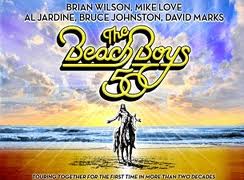
Concert Review: The Beach Boys 50th Anniversary Tour (Jones Beach Theater, New York)

I went into this concert very skeptical & almost attempted to sell off the tickets. I wasn't sure if the Beach Boys could pull it off & was afraid it would be a show of backing musicians covering for the originals. Boy was I wrong..............


A beautiful cool evening on the shores of theJones Beach Theater, made for a perfect setting for the Beach Boys 50th Anniversary Tour. Last time I saw the band was at Live Aid & at this same venue way back in 1984.

This current show blew me away, it was an incredidible celebration of a fantastic musical library the Beach Boys posses. The surf songs, the party songs, the love songs, the psychaeldic songs, the car songs & the timeless summer sixties music we all have grown up on. Of course how can you mention the Beach Boys without talking about their incredible harmonies. Those harmonies were so good they even inspired the Beatles & tonight they were right on cue.

The music was great as a nine piece band backed the original four surviving members. I did not expect this show to be so good, even more so it was great. It can be safe to say that the Beach Boys have provided us with an incredible soundtrack to beach & summer memories throughout our lives, tonight was just another dose of just that added in.


The Beach Boys 50th anniversary Tour band consisted of its original surviving members: Mike Love who's vocals are still fantastic, he has a good stage presence as he slowly moves about the stage giving the band most of its movement. Love is a cousin of the Wilson's and sang lead on a majority of the bands hits. Love was one of the first rock musicians to get involved with meditation & he accompained the Beatles to India in 1968 to study meditation under the Maharishi. Love continued to tour with the Beach Boys doing most of the lead vocals as Carl Wilson took charge of the musical arrangements, After his passing Love kept touring by leasing the Beach Boys name & using mostly backing band members.

My man, little Al Jardine (the only original non relative Beach Boy) may have stole the show with his fantastic lead vocal on Help Me Rhonda. It was a major highlight, as he got the fans dancing & singing real loud. The multi instramentalist brings good life on stage playing his guitar & having a good old time, doing it. He & Bruce Johnston's enthusiasm just rolls off into the crowd.

Bruce Johnston joined the band in 1965 (after the departure of Glen Campbell) he was very livley on stage behind his keyboards, always smiling while leading the crowd in sing along & hand clapping. He looked to be having a great time as well. Mike Love joked about Johnston being the author of the sappy Barry Manilow tune, I Write the Songs. Johnston cracked back something like "yea & Kokomo is any better".....

And of course Brian Wilson, the creative writing genius of the band who's advanced visions of music in the sixties may have actually led to his downfall. Brian has suffered from mental illness, drug, alchohol & weight problems. In the sixties he stopped touring with the band to create more of their music. His master piece was the Pet Sounds, album inspired by the Beatles Rubber Soul. In 1966 The incredible ground breaking song Good Vibrations took months & $50,000 to record.

But it hit number one on the charts & is considered one of the greatest po/rock songs of all time. It & Pet Sounds inspired Paul McCartney during the Sgt. Pepper period. When Brian heard A Day In The Life, he was devestated telling himself he could never top that. His work on his next masterpiece SMiLE was abandon & would not get completed until 2004. Recently with his problems behind him, he has had a sucessful solo album & tours.

Brain Wilson's presence is apparanet on the stage, he is to be respected & respected. But it seemed at first he is just sitting there. Is he actually playing the piano at all? Often I saw his hands hanging by his side. He doesnt talk much or look at the crowd.  Is he involved at all. With my binoculars I kep trying to figure him out. But Then all of a sudden he will sing an incredible harmony or backing vocal. In the second set after the instrumental, Love, Jardine Johnston all huddle around the piano backing Brian as he leads them on an incredible version of Add Some Music To Your Day. Then Brian continues to be masterful on my favorite Beach Boy songs Sloop John B. & Good Vibrations. Other Wilson highlights were Heroes & Villans & Sail on Sailor. The only time he got up was during the encores Kokomo.

The Beach Boys had a nine piece band backing them up, they were great but kept their place as a backing band in the back ground. Actor / sometime Beach Boy John Stamos came out to play the drums on a few tunes for an added treat. David Marx played bass & sang, he was was a young teen when he first joined the Beach Boys in the early sixties. David lived across the street from the Wilsons according to what Mike Love said on the intro's. He left the band in 1965 then returned a decade ago.

There were two touching tributes to the two other Wilson Brothers who have since passed on, Dennis & Carl. There were two seperate video clips of the two singing lead vocals (Dennis on Forever & Carl on God Only Knows) with the band on stage playing behind them as a back up. This was also an incredible addition to the show celebrating the bands history, a real touching tearful tribiute.There were also photos through the years added in the video montage.

Dennis Wilson the only real surfer in the band was the bands drummer & also a rhaspy backing vocalist. He was the wildest of the Wilson Brothes who was actually friends with Charles Manson & the Family until he realized what they were all about. Luckily he broke free from the bunch just in time. Dennis drowned in 1983 at age 39.

Carl Wilson was the youngest brother, a fine guitar player who also played a variety of instruments as well as produced. His vocal work on Good Vibrations, God Only Knows & I Can Hear Music are among his vocal highlights. Carl helped keep the band together in the days of Brians departure. The very spiritual Carl Wilson passed away after a battle with cancer in 1998 at age 51.


1st Set:
Do It Again
Little Honda
Catch A Wave
Hawaii
Don't Back Down
Surfin' Safari
Surfer Girl
Please Let Me Wonder
Marcella
Wendy
Then I Kissed Her
Kiss Me, Baby
Getcha Back
Why Do Fools Fall in Love
When I Grow Up (to Be a Man)
Disney Girls
Isn't It Time
California Saga
Cotton Fields Be True to Your School
Don't Worry Baby
Little Deuce Coupe
409
Shut Down
I Get Around

2nd Set:
Pet Sounds (Instrumental)
Add Some Music to Your Day
Our Prayer
Heroes and Villains
Sloop John B
Wouldn't It Be Nice
I Just Wasn't Made for These Times
Sail on, Sailor
All This Is That
That's Why God Made the Radio
In My Room
Forever
God Only Knows
Good Vibrations
California Girls
Help Me, Rhonda
Rock and Roll Music
Do You Wanna Dance?
Surfin' U.S.A.

Encore:
Kokomo
Barbara Ann
Fun, Fun, Fun